
Boundless Success in Prosthetic Surgery Turkish Doctors Demonstrate Excellence on the International Stage
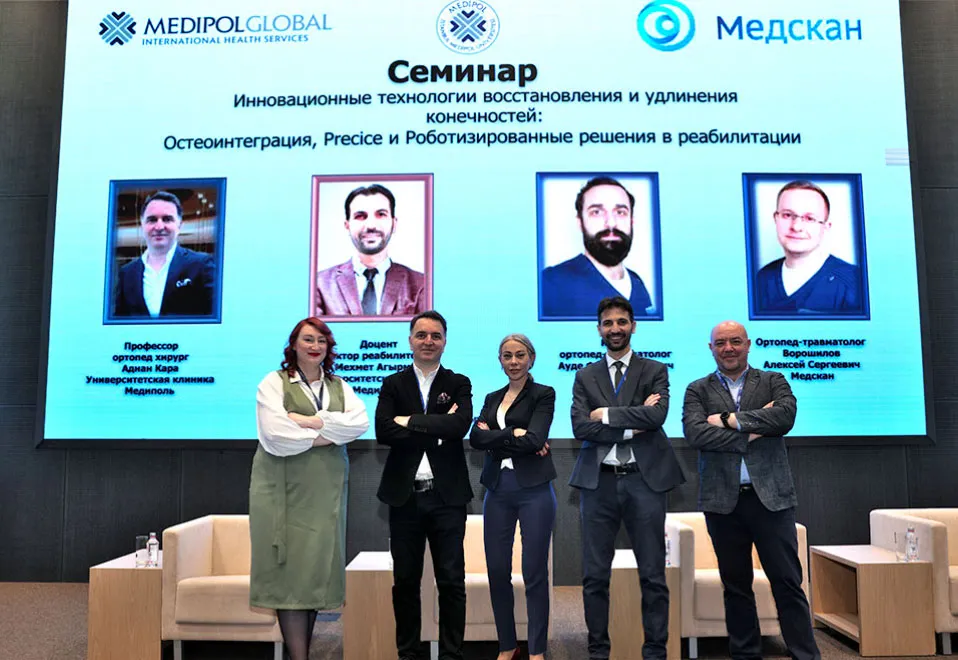
Medipol Group and the Medscan Medical Center Network hosted a seminar in Moscow, Russia, titled “Innovative Technologies for Limb Restoration and Lengthening: Osseointegration, Precice, and Robotic Rehabilitation Solutions.” The event brought together leading experts from around the world, including Professor Adnan Kara, an orthopedic and trauma specialist, and Associate Professor Mehmet Agirman, a physical medicine and rehabilitation expert, both from Medipol Mega University Hospital. The seminar focused on cutting-edge solutions for limb restoration and the future of prosthetics.
Held at Moscow’s Skolkovo Innovation Center, the seminar attracted leading professionals in medicine, technology, and rehabilitation. Professor Adnan Kara showcased the latest advancements in limb restoration, while Associate Professor Mehmet Agirman shared insights into modern rehabilitation techniques.
OSSEOINTEGRATION — A REVOLUTION IN PROSTHETICS
One of the seminar’s most discussed topics was the groundbreaking technology of osseointegration, which allows prostheses to be directly integrated into the patient’s bone. This method provides more secure attachment of prosthetics, enhances functionality, and significantly improves patients' quality of life—both physically and psychologically. Osseointegration enables patients to lead a more active lifestyle compared to traditional prosthetic methods.
The seminar also highlighted other advanced technologies. Among them, the Precice magnetic rod technology stood out, offering new opportunities for addressing limb deficiencies and enabling lengthening procedures. Another key innovation was robotic rehabilitation solutions, designed to accelerate recovery processes and improve the efficiency of rehabilitation programs.
A PROMISING FUTURE WITH HIGH-TECH SOLUTIONS
The seminar marked a milestone in the evolution of medical technologies. The innovations presented not only enhance patients' quality of life but also open new pathways for international collaboration in developing shared solutions. These advancements embody a vision of hope, promising a future filled with possibilities and new opportunities for patients worldwide.
23 December 2025, Tuesday