
Summarize This Content with Artificial Intelligence (AI):
Cystoscopy is mostly performed to investigate the cause of blood in the urine and to make a diagnosis. The urethra and bladder can be clearly visualized using a cystoscope.
What is Cystoscopy?
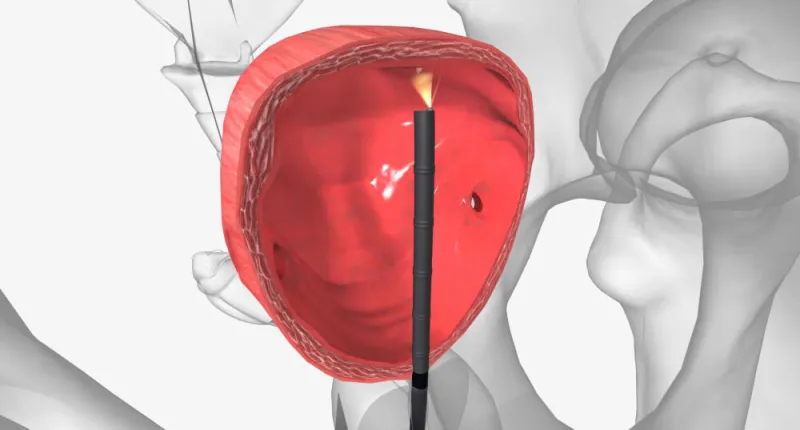
Cystoscopy is an endoscopy method used to visualize the bladder (urinary bladder) and urinary tract (urethra) and, if necessary, to take a biopsy sample. A probe with a camera and light at its tip is advanced into the bladder through the urethra, allowing direct visualization of the tissues inside the bladder. Cystoscopy can be used for both diagnostic purposes (bladder cancer, bladder stones, urinary tract strictures) and therapeutic purposes (stone and polyp removal). The procedure is usually performed today under local anesthesia with a flexible cystoscope. During cystoscopy, the cystoscope is inserted into the bladder, and the bladder is filled with a sterile fluid. This allows for a clearer view of the inside of the bladder and makes the biopsy area more visible.
Fill out the form to get information.
In Which Diseases Is Cystoscopy Used?
Cystoscopy is most commonly used when blood is present in the urine. The cause of blood in the urine is investigated with cystoscopy. Cystoscopy is used to diagnose the following conditions:
- Bladder cancer
- Bladder stones
- Bladder tumors or polyps
- Chronic urinary tract infections
- Bloody urine (hematuria)
- Prostate enlargement (pressure at the bladder outlet)
- Urethral (urinary tract) stricture
- Bladder inflammation (cystitis)
- Causes of urinary incontinence
- Congenital urethral and bladder defects
How is Cystoscopy Performed?
Cystoscopy is performed in the procedure room under local anesthesia or sedation using a flexible cystoscope. A urine sample is taken from the patient before the cystoscopy to check for urinary tract infections, and if an infection is present, the procedure may be postponed until after treatment.
During the procedure, the urethra is numbed with local anesthesia. The physician advances the cystoscope through the urethra and into the bladder, and thanks to the camera at the tip of the cystoscope, both the urethra and the bladder can be visualized. In men, if there is pressure on the bladder due to prostate enlargement, it can also be examined with cystoscopy. Sterile fluid is filled into the bladder through the cystoscope, thus clarifying the view. The specialist physician may take a biopsy sample from the bladder tissue.
If necessary, procedures such as lithotripsy, polyp removal, and stricture dilation can also be performed simultaneously during the procedure, but these procedures may require additional equipment. Cystoscopy is a procedure that takes approximately half an hour, but the duration may be longer if biopsy and treatment options are also chosen.
Does Cystoscopy Require Preparation?
Before cystoscopy, the patient's health status is checked with urine and blood tests. If there is a problem such as a urinary tract infection, the infection is treated first and the cystoscopy is planned afterwards. Comfortable clothing can be preferred for cystoscopy; fasting for 6 to 8 hours before the procedure may be required for local anesthesia. If the patient is using blood thinners or similar medications, the doctor performing the procedure may need to readjust the medication schedule. If there is a possibility of pregnancy, it must be reported to the doctor. Since the procedure will be performed under local anesthesia, an accompanying person is required for transportation assistance afterward.
What Are The Possible Complications After Cystoscopy?
Cystoscopy is generally considered a safe procedure, but every medical procedure carries some risk of complications. After cystoscopy, complications such as blood in the urine, mild pain, frequent urge to urinate, and burning sensation during urination may occur. Rare but serious complications after cystoscopy include urinary tract infection, bladder spasm, prolonged inability to urinate (retention), and damage to the urethra or bladder wall. Bleeding is usually mild and stops quickly, but excessive bleeding or clots require urgent medical attention.
Due to the risk of infection, the doctor may prescribe antibiotics if deemed necessary, but if symptoms such as high fever, chills, or foul-smelling urine occur, a doctor's evaluation should be sought.
What Should Be Considered After Cystoscopy?
Points to note after cystoscopy are as follows:
- Plenty of fluids should be consumed for the first 24 to 48 hours.
- Heavy lifting and excessive physical activity should be avoided.
- In case of blood in the urine, high fever and chills, immediate medical attention is required.
- Prescribed medications should be taken without interruption.
- The doctor's advice regarding the duration of sexual intercourse after the procedure should be followed.
Frequently Asked Questions About Cystoscopy
Are Cystoscopy And Cystography The Same Thing?
No, cystoscopy and cystography are not the same thing. Cystoscopy is the endoscopic imaging of the bladder and urinary tract. Cystography, on the other hand, is a radiological examination in which a contrast agent is administered to visualize the bladder under X-ray or fluoroscopy.
Can The Kidney Be Examined With Cystoscopy?
The kidney cannot be directly visualized with cystoscopy. Cystoscopy is used to visualize the bladder and urethra, but if necessary, the ureteral orifices (the openings that carry urine from the kidney to the bladder) can be visualized during cystoscopy.
Who Should Not Undergo Cystoscopy?
Cystoscopy is generally a safe procedure. Cystoscopy is not performed on individuals with urinary tract infections; it is postponed. Cystoscopy is performed after the infection treatment is completed. Cystoscopy may not be performed on the following individuals, or a pre-procedure evaluation may be required:
- Patients with severe bleeding disorders or uncontrolled clotting disorders
- Patients with serious heart or lung disease or those at high risk for anesthesia
- Patients with lesions in the area that may interfere with the procedure
- Pregnant patients
Is A Catheter Inserted After Cystoscopy?
A catheter is not inserted after a simple cystoscopy, but if a biopsy is taken, a large amount of tissue is removed, or surgery is performed, the specialist may deem it appropriate to insert a catheter and observe the patient in the hospital.
How Does The Recovery Process Proceed After Cystoscopy?
The recovery process after cystoscopy lasts from a few hours to a few days. After a simple diagnostic cystoscopy, the patient can go home the same day. Symptoms such as mild burning, frequent urination, and blood in the urine may occur in the first 24 to 48 hours after the procedure and usually resolve on their own.
Is Cystoscopy A Surgery?
Cystoscopy is generally a simple endoscopy method performed for diagnostic purposes, but if procedures such as stone fragmentation, polyp removal, or tumor removal are to be performed during the procedure, it is considered a surgical intervention and requires observation and bleeding check afterwards.
Does Cystoscopy Hurt?
Discomfort is commonly felt during cystoscopy. In particular, discomfort such as a burning or stinging sensation during the initial passage through the urinary tract and an inability to stop the urge to urinate as the bladder fills may be experienced. Pain, burning, or cramping may be felt for a while after cystoscopy, but this resolves on its own within a short time or can be controlled with painkillers.
Is Cystoscopy Harmful?
Cystoscopy is generally considered safe and may be necessary for the diagnosis and treatment of some diseases, but as with any invasive procedure, there is a risk of infection, bleeding, tissue injury, or side effects related to anesthesia.
How Long Does A Cystoscopy Take?
A cystoscopy is completed in 15 to 30 minutes, but the duration may be longer if a biopsy or other procedure is also to be performed.
Who Can Undergo Cystoscopy?
Cystoscopy can be performed on women, men, and, if deemed necessary, pediatric patients.
What Is Blue Light Cystoscopy Or Photodynamic Diagnosis?
Blue light cystoscopy, or photodynamic diagnosis, is a method used to increase sensitivity in the diagnosis of bladder cancer. A special light and a dye are used to make tumors on the surface more visible. In the procedure, a photosensitive substance is injected into the bladder, and this substance reveals cancer cells. Clinically, under blue light, cancerous tissues appear brighter than normal tissue, making it easier to detect small or flat lesions.
Is Local Anesthesia Cystoscopy Performed On An Empty Stomach?
There is no requirement to fast for local anesthesia cystoscopy.
Creation Date:01.04.2026
Update Date:01.04.2026
Created by:Medipol Health Group Web Editorial Board