
Summarize This Content with Artificial Intelligence (AI):
Transthoracic echocardiography (TTE) is one of the most fundamental diagnostic methods used to evaluate heart health. Commonly known as a “heart ultrasound,” TTE is a non-invasive technique that provides detailed information about the internal structure of the heart using sound waves. Since it does not involve radiation, is painless, and is easy to perform, it is highly advantageous in terms of patient comfort.
What Is Transthoracic Echocardiography (TTE)?
Transthoracic echocardiography (TTE) is one of the most fundamental diagnostic tools used to assess heart health. Commonly known as a “heart ultrasound”, it is a non-invasive imaging method that uses sound waves to provide detailed information about the heart’s internal structures.
Because it does not use radiation, is painless, and can be performed quickly and comfortably, TTE is one of the most preferred imaging methods in cardiology.
TTE allows the visualization of the heart’s chambers, valves, wall motion, and blood flow in real time. It is used in both adults and children for evaluating structural and functional heart abnormalities and serves as a first-line diagnostic test in both outpatient and hospitalized patients.
Fill out the form to get information.
Which Conditions Can Be Diagnosed with Transthoracic Echocardiography?
Transthoracic echocardiography (TTE) is a key imaging method used in the diagnosis and follow-up of many heart and vascular diseases. It provides valuable information to physicians during both initial diagnosis and treatment monitoring.
The main conditions assessed with TTE include:
- Heart failure
- Heart valve diseases (mitral or aortic stenosis/regurgitation, valve infections, etc.)
- Congenital heart diseases
- Pericardial (heart membrane) diseases
- Cardiomyopathies (heart muscle disorders)
- Aortic and major vessel diseases (aortic aneurysm, aortic dissection, pulmonary hypertension)
- Cardiac arrhythmias
- Infectious heart conditions (endocarditis, pericarditis)
- Heart enlargement
- Evaluation of congenital heart defects
- Monitoring treatment effectiveness and follow-up
How Is Transthoracic Echocardiography (TTE) Performed?
The TTE procedure is simple and non-invasive, and no special preparation is needed beforehand. The patient can eat or drink normally before the test.
- Preparation: The patient is asked to remove clothing from the waist up (a hospital gown may be provided). For female patients, privacy is ensured using covers or curtains.
- Positioning: The patient typically lies on their left side.
- Application of Gel: A special ultrasound gel is applied to the chest to ensure optimal sound transmission and clear imaging.
- Imaging: A small ultrasound probe (transducer) is gently moved across specific points on the chest to capture detailed heart images.
- Evaluation: The images are recorded and analyzed by a cardiologist, who prepares a report based on the findings.
Frequently Asked Questions about Transthoracic Echocardiography (TTE)
How Is TTE Performed?
The patient lies on their back or left side. A gel is applied to the chest, and images of the heart are obtained using an ultrasound probe.
Are the Results Available Immediately?
Yes. The cardiologist can view the heart images in real time, and the report is typically prepared on the same day.
How Long Does TTE Take?
The procedure usually takes 15–30 minutes, depending on the patient’s condition.
Do I Need to Be Fasting for TTE?
No. TTE can be performed with or without fasting. However, if it’s combined with another test (e.g., TEE), your doctor may recommend fasting.
Can TTE Be Performed During Pregnancy?
Yes. TTE is completely safe for both mother and baby because it does not use radiation.
Can TTE Detect Artery Blockage?
Not directly. Coronary angiography is needed for a definitive diagnosis of arterial blockage.
Is TTE the Same as an ECG?
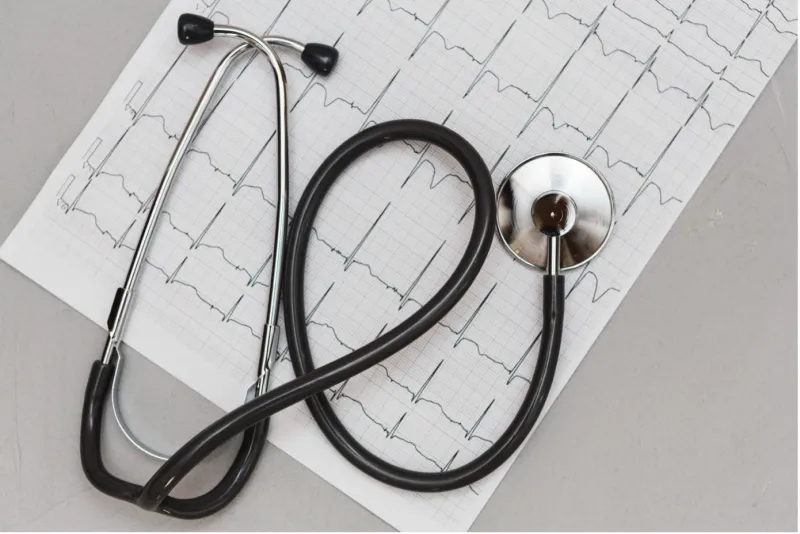
No. ECG measures the heart’s electrical activity, while TTE shows its structure and function. They provide complementary information.
How Is TTE Performed in Women?
Privacy is prioritized. The chest is covered, with only the necessary area exposed. A female technician or nurse may assist if preferred.
Can TTE Detect a Heart Attack?
Yes. TTE can reveal damage to the heart muscle caused by a heart attack.
Will I Be Sedated During TTE?
No. TTE is a completely awake, non-invasive, and painless procedure; sedation or anesthesia is not required.
Can I Drink Water Before TTE?
Yes. There are no restrictions on water intake before the procedure.
Who Performs TTE?
TTE is performed by trained cardiologists or experienced technicians (echocardiography specialists). The report is interpreted by a cardiologist.
Can TTE Detect Blocked Arteries?
TTE cannot directly show arterial blockages but may suggest indirect signs such as reduced blood flow or wall motion abnormalities.
What Are Normal TTE Values?
Normal values vary based on age, body size, and heart condition. Your cardiologist will interpret your report according to these factors.
Can TTE Detect Heart Failure?
Yes. TTE is the primary method used to diagnose and evaluate the severity of heart failure.
Is TTE Painful?
No. It is completely painless and causes no discomfort.
Does TTE Involve Radiation?
No. TTE uses sound waves, not radiation, and is entirely safe.
What Information Is Included in a TTE Report?
The report typically includes:
- Heart chamber dimensions
- Valve structure and function
- Heart pumping strength (Ejection Fraction – EF)
- Any abnormalities or additional findings
How Is the Report Interpreted?
A cardiologist evaluates the findings in conjunction with symptoms, ECG results, lab tests, and other imaging studies.
How Much Does TTE Cost?
Costs vary by healthcare facility. For pricing, please contact your nearest Medipol Hospital.
Is There a Difference Between TTE and Standard Echocardiography?
No. TTE is the standard echocardiography, commonly referred to as a “standard ECHO.”
Creation Date:04.03.2026
Update Date:04.03.2026
Created by:Medipol Health Group Web Editorial Board