
Summarize This Content with Artificial Intelligence (AI):
Canker sores are round, painful mouth ulcers with a white-yellow center and red border, appearing on the cheeks, lips, tongue, and gums. They can cause discomfort while speaking, eating, and swallowing. Stress, weakened immunity, vitamin/mineral deficiencies, hormonal changes, oral trauma, and certain foods may trigger their formation.
What Is A Canker Sore?
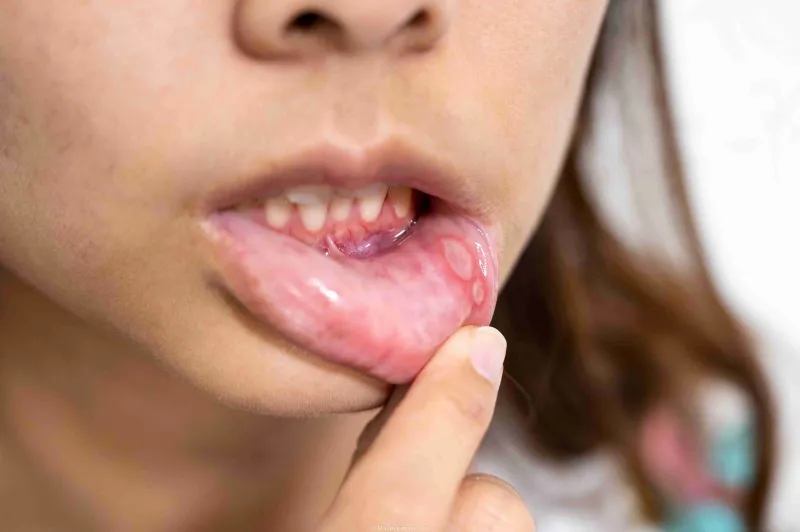
A canker sore (aphthous ulcer) is a shallow, painful oral lesion with a red border and white-yellow center. Despite the term 'ulcer,' canker sores are superficial, benign, and usually self-healing. They typically begin as mild sensitivity or burning before developing into a visible sore.
They usually start with mild sensitivity or a burning sensation and quickly develop into a distinct sore that may sting while eating, speaking, or brushing teeth.
Canker sores typically form on soft oral tissues — inner cheeks, inner lips, sides of the tongue — which are mobile and sensitive. They may appear as a single lesion or multiple sores at once.
Fill out the form to get information.
Where Do Canker Sores Most Commonly Appear?
Canker sores appear most often on soft, mobile oral tissues. These areas are more easily injured due to daily movements (speaking, chewing) and contact/friction with teeth. Canker sores appear less often on firmer surfaces like the hard palate, which is more resistant to friction and has thicker tissue.
Common sites where canker sores are frequently seen:
- Inner lips (upper and lower lip mucosa)
- Inner cheeks
- Tongue edges and underside
- Vestibule (the transition zone between the front gum and inner lip/cheek)
- Soft palate and back of the mouth
Canker sores occur more frequently in these areas because the tissues are soft and mobile, and exposed to friction and micro-trauma (tooth contact, biting, brushing, dental appliance contact).
What Causes Canker Sores?
Canker sore formation is rarely due to a single cause; multiple factors typically combine. The most common causes are:
- Oral trauma or irritation: Biting the cheek or lip, sharp-edged foods, aggressive brushing, sharp tooth edges, ill-fitting dentures, and orthodontic wires can all trigger canker sore formation.
- Stress: Intense workload, sleep deprivation, and emotional distress can predispose to canker sore development.
- Weakened immunity: Canker sores appear more easily during periods of reduced immune resistance.
- Vitamin and mineral deficiencies: Deficiencies in Vitamin B12, iron, and folic acid are associated with recurrent canker sores.
- Dietary choices: Acidic, spicy, very hot, or hard foods can irritate the oral mucosa and make canker sore development easier.
- Hormonal changes: Hormonal fluctuations may increase the risk of canker sore formation.
- Sensitivity to oral care products: Certain ingredients in toothpaste or mouthwash may facilitate canker sore development.
- Genetic predisposition: Canker sores tend to appear similarly in family members.
- Certain diseases: Canker sores occur more frequently alongside conditions such as AIDS (HIV infection), Behçet's disease, inflammatory bowel disease (Crohn's disease, ulcerative colitis), pharyngitis, and some upper respiratory infections. Frequently recurring, slow-healing sores may be a sign of an underlying health problem.
Why Do Children Get Canker Sores?
In children, canker sore formation is often related to immune system sensitivity and oral irritation. Biting the cheek or tongue, teething periods, hard foods, stress, vitamin/mineral deficiencies (especially B12 and iron), and infections can trigger canker sores in children. Poor oral hygiene can also increase the risk.
Why Do Infants Get Canker Sores?
In infants, canker sores typically arise due to the delicate nature of the oral mucosa. Friction from pacifiers or bottles, teething, an immature immune system, and certain viral infections can cause canker sores in infants.
What Are the Symptoms of Canker Sores?
A canker sore is a mouth wound with an obvious appearance that is quickly noticed. However, it often does not begin directly as an open sore. In the early stage, mild burning, tingling, or tenderness at a specific point in the mouth may be felt. Other symptoms include:
- Painful sore inside the mouth
- Stinging and sharp pain
- Round or oval shape with a whitish/yellowish layer in the center and a distinct red border
- Pain that worsens on contact or touch
- Worsening with acidic, salty, or spicy foods
- Difficulty speaking and eating
How Are Canker Sores Treated?
Canker sores are generally self-healing, harmless sores. The healing time depends on the size of the sore and can range from a few days to a few weeks. Since frequently recurring sores may indicate another health condition, a treatment process targeting the underlying cause may be initiated. For temporary sores, the following steps can be applied:
- Maintaining good oral hygiene
- Rinsing with salt water or baking soda solution
- Avoiding foods that may burn or irritate the inside of the mouth
- Using oral sprays or rinses with analgesic and antiseptic properties
- Applying diluted hydrogen peroxide to the affected area with a cotton swab
- Drinking adequate amounts of water throughout the day
- Replacing identified vitamin and mineral deficiencies with appropriate supplements
- Using alcohol-free corticosteroid-containing oral products
- Applying protective and antiseptic gels or creams directly on the sore
- Avoiding irritating chemicals in toothpaste and oral care products
- Reducing stress
Canker sores that recur frequently, take a long time to heal, appear in large numbers, or cause severe pain may be a sign of a different condition. Such sores may be associated with vitamin and mineral deficiencies, immune system-related problems, or certain systemic diseases.
In particular, if canker sores are accompanied by fever, fatigue, weight loss, joint pain, or other symptoms outside the mouth, a specialist should be consulted to evaluate the underlying cause.
Frequently Asked Questions About Canker Sores
How Do Canker Sores Heal Fastest?
Canker sores heal fastest when good oral hygiene is maintained, irritating foods are avoided, and appropriate topical products are applied directly on the sore.
Which Vitamin Deficiency Causes Canker Sores In The Mouth?
Oral canker sores are most commonly associated with Vitamin B12, iron, and folic acid deficiencies.
When Are Canker Sores Dangerous?
Canker sores should be evaluated if they recur very frequently, last longer than 2–3 weeks, are very painful, or appear alongside other symptoms.
Can Sadness Cause Canker Sores?
Yes. Stress and sadness can increase the sensitivity of oral mucosa and trigger canker sore formation.
Why Do Canker Sores Appear On The Upper Palate?
Canker sores on the upper palate can appear after irritation from hot foods, hard foods, or oral trauma.
Does Sparkling Water Help Canker Sores?
There is no clear evidence that sparkling water directly heals canker sores; in fact, its acidic nature may increase irritation in some people.
Are Canker Sores Contagious Through Kissing?
No. Canker sores are not contagious and cannot be transmitted through kissing.
Is Yogurt Good For Canker Sores?
Yogurt may provide some oral comfort for some people, but its therapeutic effect on canker sores is not clearly established.
Can A Canker Sore In the Mouth Spread To The Vagina?
No. Canker sores are not contagious and do not spread to other parts of the body through contact.
Do Canker Sores Cause Bad Breath?
A canker sore alone does not usually cause bad breath, but if oral hygiene deteriorates, bad breath may be noticed.
Are Canker Sores And Cold Sores The Same Thing?
No. Canker sores appear inside the mouth, while cold sores typically appear on the lip border. Cold sores are contagious; canker sores are not.
How Long Does It Take For A Canker Sore To Heal?
Canker sores usually heal spontaneously within 7–14 days.
Why Do I Keep Getting Canker Sores?
Persistent canker sore recurrence may be due to immune system problems, vitamin/mineral deficiencies, chronic stress, or underlying systemic diseases.
Why Do Canker Sores Appear On The Tongue?
Canker sores on the tongue usually arise from tongue biting, irritation from hot or spicy foods, stress, or reduced immunity.
Creation Date:20.04.2026
Update Date:20.04.2026
Created by:Medipol Health Group Web Editorial Board