
Summarize This Content with Artificial Intelligence (AI):
Curettage is the process of cleaning inflamed tissues and bacteria accumulated beneath the gum line due to gum disease, followed by smoothing the root surface. The root surface planing procedure, which is generally performed by periodontology specialists under local anesthesia, ensures the complete removal of tartar, plaque, and toxic deposits.
What Is Curettage?
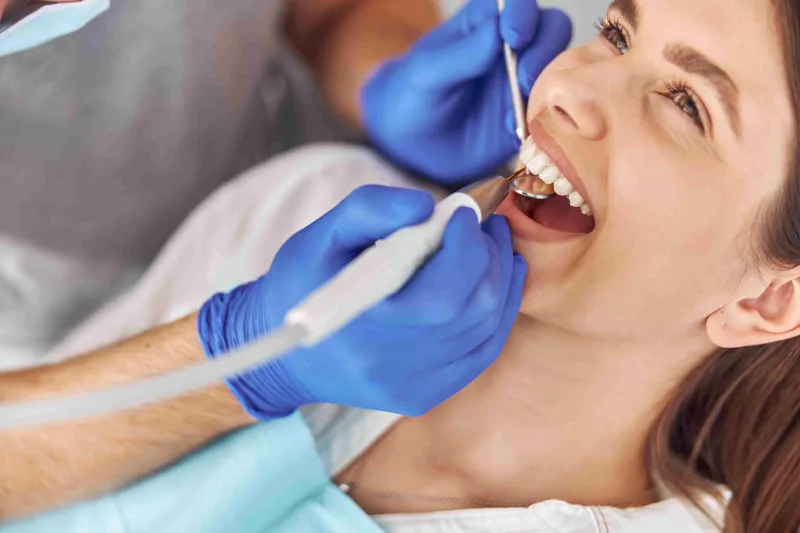
Curettage is the process of cleaning plaque, tartar, inflamed tissue, and bacteria accumulated on the root surface of teeth and beneath the gums due to gum disease, using specialized instruments. In dentistry, it is also commonly referred to as "root surface planing" or "deep tartar cleaning."
In this procedure, hardened tartar, plaque, and diseased soft tissue accumulated in areas beneath the gum line that are not visible to the naked eye are cleaned. This makes the root surface of the tooth smoother and makes it harder for bacteria to adhere.
Unlike conventional superficial tartar cleaning, curettage focuses below the gum line. In other words, it reaches deeper areas that cannot be accessed during regular cleaning. In this respect, curettage plays an important role in bringing under control the periodontal problems underlying complaints such as gum bleeding, sensitivity, bad breath, gum recession, and tooth mobility.
Fill out the form to get information.
What Are The Types Of Curettage?
The curettage procedure is classified under four main headings according to the application technique and scope of treatment. These headings are as follows:
Subgingival Curettage
Subgingival curettage is the process of cleaning tartar, bacterial plaque, and inflamed tissue from the pocket area located below the gum line. It is also known as tartar cleaning.
Periodontal Curettage
Unlike subgingival curettage, this also involves the cleaning of inflamed soft tissue in the pocket wall. It is preferred in more advanced cases of periodontitis.
Closed Curettage
This is a cleaning procedure performed without making a surgical incision in the gums. It is the first-choice method in early-stage periodontal diseases.
Open Curettage
This involves opening the gums and performing cleaning under direct vision. Accumulated tartar, tissue, and the source of infection are completely removed. At the end of the procedure, the gums are repositioned and sutured.
Why Is Curettage Performed?
Curettage is performed to bring gum disease under control, reduce inflammation, and maintain oral health without losing teeth. Its primary aim is therefore to treat existing problems and halt the progression of the disease by cleaning the plaque, tartar, and inflamed tissue accumulated below the gum line.
In people with gum disease, the natural spaces between the tooth and gum gradually turn into "pockets," and dense bacteria, tartar, and toxins accumulate inside these pockets. Regular brushing and superficial tartar cleaning cannot reach these areas. As a result, gum disease (gingivitis and periodontitis) develops. The most important reason for performing curettage is to halt the progression of gum disease.
Other reasons for performing curettage are as follows:
- To reduce gum inflammation
- To reduce periodontal pockets and their depth
- To prevent bone and tooth loss
- To reduce bad breath and taste disturbances
- To bring gum bleeding and sensitivity under control
- To provide initial treatment without the need for surgery (in suitable cases, the need for surgical intervention may be eliminated or at least postponed with curettage and regular care alone)
How Is Curettage Performed?
The curettage procedure consists of several stages; however, local anesthesia is applied to ensure the patient's comfort during the procedure and the process advances with care at every stage. Thanks to local anesthesia, the patient does not experience pain or a sensation of pressure, and the dentist can reach the gum pockets more easily to perform deep cleaning. The step-by-step application of the procedure is as follows:
- Examination and pocket depth measurement: Before curettage, the periodontology specialist performs a comprehensive oral examination to assess gum health. The depth of the pockets between the tooth and gum is measured with a periodontal probe.
- Local anesthesia application: Local anesthesia is generally applied to increase the patient's comfort during the procedure. The area to be cleaned is thus numbed, and the patient passes through the curettage procedure comfortably without feeling pain.
- Cleaning procedure (curettage): The main stage of curettage is the cleaning of bacterial plaque and hardened tartar below the gum line using specialized periodontal instruments. At the same time, inflamed soft tissues present inside the pockets are also carefully removed during curettage. This is not merely a superficial cleaning; it aims to eliminate the source of infection by reaching deep areas that are not visible to the naked eye.
- Root surface planing: Rough areas created by tartar on the root surface facilitate the re-adherence of bacteria. For this reason, the root surface is smoothed using specialized instruments. This prepares the appropriate environment for the gums to attach to the tooth more healthily and firmly over time.
- Rinsing and final check: At the end of the curettage procedure, the treated area is gently rinsed with antiseptic solutions. The dentist then carefully checks the cleanliness of the gum pockets, whether the root surface has been sufficiently smoothed, and whether any irritant tissue remains.
The curettage procedure is not a one-time application; regular follow-up appointments are required to ensure that healing progresses properly.
What Are The Advantages Of Curettage?
Curettage has many advantages, from halting the progression of gum disease and preventing tooth loss to reducing bad breath and achieving a healthier smile. For this reason, curettage is one of the most effective treatment options preferred for gum diseases before proceeding to surgery. The main advantages are as follows:
- It halts the progression of gum disease.
- It reduces the risk of tooth and bone loss.
- It can reduce the need for surgical intervention.
- It reduces gum bleeding and swelling.
- It eliminates bad breath.
- It reduces the depth of gum pockets.
- It supports oral hygiene.
- It is a less invasive treatment compared to surgical procedures.
- It contributes to smile aesthetics.
What Should Be Paid Attention To After Curettage?
The points to be paid attention to after curettage are very important for the healing process to progress healthily and for the treatment to provide maximum benefit.
- The consumption of hot food and beverages should be postponed for the first few hours.
- Cigarettes and alcohol significantly slow gum healing and increase the risk of infection, and should therefore not be used.
- Soft foods should be preferred on the first day.
- Oral care should not be neglected. On the first day, only the side of the teeth where the procedure was not performed can be very gently brushed. The following day, the entire mouth can be brushed with a soft-bristled toothbrush.
- The dentist's guidance should be awaited before using dental floss, mouthwash, and interdental brushes.
- The medications prescribed by the dentist should be used regularly.
- The treated area should not be touched with the tongue.
- Hot-cold sensitivity or mild gum stinging may last a few days. This is normal and temporary.
- Strenuous activities and exercise should be avoided for a few days.
- Follow-up appointments should not be missed.
- Oral care should be made into a regular routine.
Frequently Asked Questions About Curettage
Is Curettage Treatment Painful?
Since curettage treatment is performed under local anesthesia, pain or discomfort is generally not felt during the procedure.
How Many Days Does It Take To Recover After Curettage?
Initial recovery after curettage begins within one week, and complete recovery of the gums may take several weeks.
How Long Does Bleeding Last After Curettage?
Mild bleeding after curettage decreases within the first few hours and generally stops within the same day.
What Happens If Curettage Is Not Performed?
If curettage is not performed, gum disease can progress, leading to bone loss, tooth mobility, and ultimately tooth loss.
Who Is Curettage Performed On?
Curettage is performed on patients whose gum pockets have deepened, whose inflammation and tartar accumulation have increased, and who have moderate gum disease.
How Many Sessions Does Curettage Take?
Curettage is generally completed in 1–4 sessions depending on the extent of the gum disease.
Creation Date:20.04.2026
Update Date:20.04.2026
Created by:Medipol Health Group Web Editorial Board