
Summarize This Content with Artificial Intelligence (AI):
Zirconia veneering is a restorative dental treatment used for aesthetic and functional purposes, characterized by high durability and a natural tooth-like appearance. Thanks to its metal-free structure, it offers high light translucency, ensuring compatibility with natural tooth tissue and delivering natural-looking results. Its biocompatible properties also provide a healthy integration with the gum tissue and long-term service life.
What Is A Zirconia Veneer?
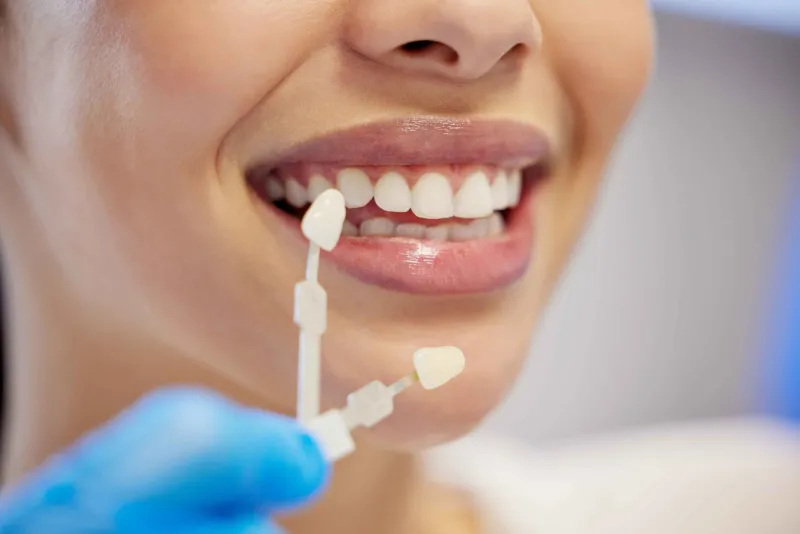
Zirconia veneering is a ceramic coating used to cover the outer surface of teeth, whose primary component is zirconium dioxide (ZrO₂). Zirconium dioxide is a material known for its high durability and tissue compatibility. This type of veneer aims to improve the color, shape, and overall appearance of the tooth while also supporting its chewing function. Its metal-free structure helps achieve a more natural appearance.
Zirconia veneers used in dentistry resist the forces generated during daily chewing. This property plays an important role in making zirconia veneers a preferred option for long-term use.
Zirconia offers more aesthetic results compared to metal-supported systems, while also exhibiting higher fracture resistance than conventional ceramics. This property ensures that zirconia veneers are resistant to chewing forces and are regarded as a reliable option.
Fill out the form to get information.
What Are The Properties Of Zirconia Veneers?
Zirconia veneers are advanced ceramic-based products developed to meet expectations for long-lasting, healthy, oral tissue-compatible, and aesthetically pleasing outcomes. Thanks to their physical and biological properties, these veneers deliver results close to the appearance of natural teeth while reliably supporting daily chewing functions. The properties of zirconia veneers are as follows:
- High durability: Zirconia is a strong material capable of withstanding the forces generated during chewing. As a result, the veneers are resistant to cracking and fracturing under daily use.
- Close to natural tooth appearance: Zirconia veneers do not create an artificial look due to their tooth-colored structure. Their ability to transmit and reflect light contributes to a natural appearance consistent with surrounding teeth.
- Metal-free: Zirconia veneers contain no metal. This offers an aesthetic advantage and reduces the risk of dark color reflection forming at the gum margin.
- Compatible with gum tissue: Zirconium dioxide is a material compatible with oral tissues. This property helps achieve a more balanced integration between the gum and the veneer.
- High color stability: Thanks to its ceramic structure, it is resistant to color change over time. The risk of staining and dulling under daily use is low.
- Low thermal conductivity: It may contribute to reducing the likelihood of sensitivity developing in response to hot and cold food and beverages.
How Is A Zirconia Veneer Made?
The zirconia veneer procedure is a treatment process consisting of specific stages, planned according to the measurements of the tooth and the structure of the mouth. This procedure encompasses both the clinical applications carried out by the dentist and the production stages performed in a laboratory setting. Today, zirconia veneers are prepared using digital technologies that ensure precise measurement and fabrication. The preparation stages are as follows:
Examination And Planning
In the first stage, the dentist examines the tooth or teeth to receive zirconia veneers. The current condition of the tooth, the occlusal relationship, and the restoration needs are assessed.
Preparation Of The Tooth For Veneering
A controlled reduction is made to the tooth surface so that the zirconia veneer can be properly seated. This procedure is carried out to create the necessary space corresponding to the thickness of the veneer. Tooth tissue is preserved as much as possible during the process.
Taking Impressions Or Digital Scanning
After the tooth is prepared, impressions are taken to ensure a precise fit of the veneer. These impressions can be taken using conventional methods or obtained digitally with intraoral scanners. The impression is then sent to the laboratory where the veneer will be fabricated.
Digital Design Of The Veneer
The impressions taken in the laboratory environment are transferred to a computer. The shape, dimensions, and compatibility of the zirconia veneer with the surrounding teeth are designed digitally.
Fabrication Of The Zirconia Veneer
The designed veneer is shaped using specialized equipment. It is then fired at high temperatures to enhance its durability. Where necessary, coloring processes may be applied to the veneer to match the natural tooth color.
Trial Fitting And Bonding Of The Veneer To The Tooth
The prepared zirconia veneer is temporarily placed on the tooth to check its fit. Contact points with the tooth, occlusion, and overall appearance are evaluated. Minor adjustments are made if needed. Once the fit checks are completed, the zirconia veneer is permanently bonded to the tooth.
What Should Be Done After a Zirconia Tooth Is Placed?
After the zirconia tooth veneer procedure is completed, there are several points to pay attention to in order to ensure the longevity of the veneers and the preservation of oral health. These points are as follows:
- It is recommended not to eat for the first few hours.
- Since hard-crusted foods and sticky foods can place excessive load on the veneers, soft foods are recommended during the first few days.
- Although zirconia veneers are resistant to decay, teeth should be brushed at least twice a day to protect the surrounding gum tissue and natural tooth structure.
- Regular cleaning of the areas around the veneer using dental floss or interdental brushes helps maintain gum health.
- Using teeth to crack ice, hard candy, or similar objects is not recommended, as it may cause damage to the veneers.
- If there is a habit of grinding or clenching teeth, a night guard may be recommended to protect the veneers.
- Regular dental checkups should not be neglected. The fit of the veneers and gum health should be evaluated at periodic intervals.
What Are The Prices Of Zirconia Veneers?
Zirconia veneer prices are determined on an individual basis according to the number of teeth to be treated, the scope of the treatment, the materials and techniques to be used, and the treatment plan drawn up following the dentist's examination. For this reason, a brief preliminary evaluation is needed in order to provide a specific price. You can fill in the form below to receive a personalized price quote and a suitable treatment plan.
Frequently Asked Questions About Zirconia Veneers
Why Are Zirconia Teeth Expensive?
Zirconia teeth are costly due to their advanced ceramic material, digital fabrication technology (CAD-CAM), and high aesthetic and durability properties.
Can Zirconia Be Used On Implants?
Yes, zirconia veneers can be safely used as implant-supported prostheses.
What Is The Lifespan Of A Zirconia Veneer?
With regular oral care and checkups, they can be used for an average of 10–15 years or more.
Can A Zirconia-Treated Tooth Decay?
The zirconia veneer itself does not decay; however, the natural tooth tissue beneath the veneer can decay.
Does A Zirconia Tooth Break Easily?
No, zirconia is a highly durable material; however, it may sustain damage under excessive force.
When Does A Zirconia Tooth Settle In?
It generally adapts to the oral structure within a few days after placement.
Does A Zirconia Tooth Dissolve?
No, zirconia teeth do not dissolve in the oral cavity.
Who Is Not Suitable For Zirconia Veneers?
Careful evaluation is required for individuals with uncontrolled teeth-grinding habits and insufficient tooth support.
Which Is Better — Porcelain Or Zirconia?
In terms of durability and aesthetics, zirconia is generally more advantageous than porcelain.
Can Zirconia Be Applied To Back Teeth?
Yes, thanks to its high durability, it can be preferred for posterior teeth as well.
Which Is Better — Zirconia Or Metal?
In terms of aesthetics and gum compatibility, zirconia is more advantageous than metal-supported veneers.
Can Porcelain Be Used On Top Of Zirconia?
Yes, porcelain can be applied over a zirconia substructure for aesthetic purposes.
Which Is Better — Implant Or Zirconia?
An implant is a treatment method, while zirconia is a veneer material; they are not alternatives to each other.
What Should Not Be Eaten With Zirconia Teeth?
Cracking ice, hard candy, and shelled nuts with the teeth is not recommended.
What Happens If A Zirconia Tooth Does Not Fit Properly?
In the event of a misfit, gum problems, sensitivity, or chewing difficulties may occur.
Does A Zirconia Tooth Break Quickly?
No, it is not expected to break quickly with proper use.
How Long Does Zirconia Veneering Take?
It is generally completed within 3–7 days. The timeframe may vary depending on the number of teeth and oral structure.
Is Zirconia Veneering Harmful?
No. It is a biocompatible material, compatible with the gums, and the risk of allergic reaction is low.
Does Zirconia Veneering Cause Pain?
No pain is felt during the procedure. Mild, short-lived sensitivity may occur afterward and generally subsides quickly.
Creation Date:04.05.2026
Update Date:04.05.2026
Created by:Medipol Health Group Web Editorial Board