
Summarize This Content with Artificial Intelligence (AI):
Wisdom tooth symptoms generally manifest as pain, swelling, and difficulty chewing due to jaw crowding. This condition, which can progress to infection and tooth loss due to impacted or partially impacted tooth structure, can be managed with proper treatment planning and surgical extraction when necessary.
What Is A Wisdom Tooth?
Wisdom teeth are the third molars located at the very back of the jaw. These teeth typically erupt between the ages of 17 and 25, coinciding with the late adolescent years.
It is expected that each person will have four wisdom teeth in total — two in the upper jaw and two in the lower jaw — however, in some individuals these teeth may never develop or may appear in greater numbers.
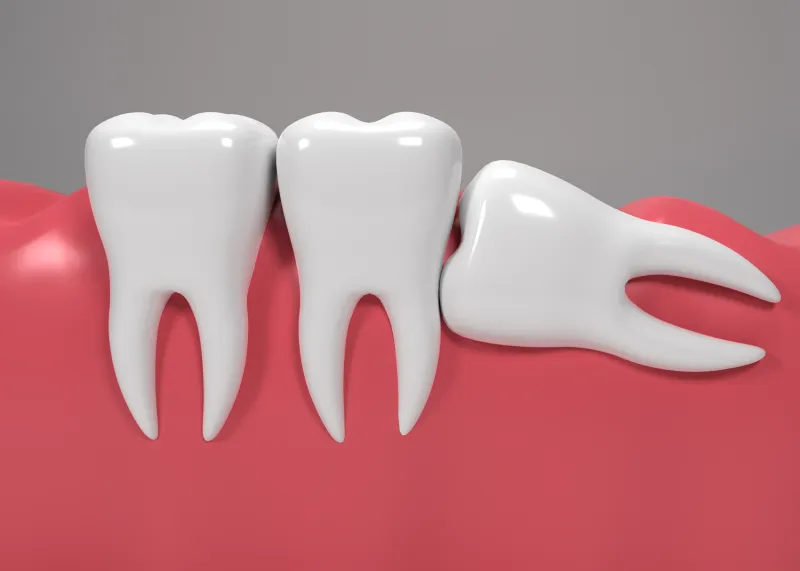
These teeth frequently cannot find sufficient space in the jawbone and may remain partially or fully impacted.
Due to insufficient space, wisdom teeth may become misaligned or exert pressure on adjacent teeth even when they do erupt into the mouth.
This misalignment can cause the tooth to be positioned horizontally, at an angle, or tilted. These conditions can damage the jawbone, neighboring teeth, and nerves, as well as lead to problems such as severe pain and infection inside the mouth.
These complaints are generally described as wisdom tooth pain. Extraction of the wisdom tooth is recommended by physicians due to the risk of severe pain and complications.
Fill Out the Form to Get Information and an Appointment
What Are The Symptoms Of A Wisdom Tooth?
The primary causes of pain arising from the tooth itself are decay in the tooth or inflammation developing in the gum.
On the other hand, even if wisdom teeth do not cause direct pain, they can lead to various discomforts that radiate to different parts of the body.
Wisdom tooth symptoms are listed below:
- Tooth pain and sensitivity in the gums.
- Severe pain while chewing.
- Headache or neck pain.
- Pain felt in the jaw and/or ear.
- Bad breath (wisdom tooth odor).
- Restricted mouth opening.
- Swelling in the lymph nodes.
Wisdom Tooth Infection Symptoms
The symptoms of wisdom tooth infection generally stem from soft tissue infection around the tooth and can have both local and systemic effects.
The most common complaint is severe tooth and jaw pain that can spread from the infected area to the ear, throat, or head.
This pain is frequently accompanied by noticeable swelling and redness in the gum surrounding the wisdom tooth.
Progression of the infection can cause spasm of the jaw muscles, leading to difficulty opening the mouth (trismus).
Wisdom tooth infection symptoms are listed below:
- Severe tooth and jaw pain
- Noticeable swelling and redness in the gum
- Restricted mouth opening (Trismus)
- Difficulty swallowing
- Bad breath
- Fever and general fatigue
- Pain radiating to the ear, throat, or head
How Does Wisdom Tooth Pain Go Away?
Among the leading methods that provide relief from wisdom tooth pain are cold compress application and saltwater gargling.
The following applications help reduce swelling and inflammation in the area:
- Apply a cold compress to the painful area from the outside using an ice pack or cold pack.
- Gargle regularly with salt water prepared by adding some salt to warm water.
In addition, over-the-counter pain relievers recommended by your doctor can help control the pain. Do not use medication without consulting your doctor.
What Is Wisdom Tooth Extraction?
Wisdom tooth extraction requires different clinical approaches depending on the position of the tooth and the degree of impaction within the jawbone.
For third molars that have fully erupted to the surface of the mouth, a simple tooth extraction procedure is usually sufficient.
On the other hand, impacted wisdom teeth that are stuck within the bone or positioned at an incorrect angle must be removed through a more detailed surgical procedure.
Regardless of the type of extraction, local anesthesia is first applied to the area to ensure patient comfort and completely eliminate the sensation of pain.
Extraction of impacted teeth involves the physician carefully incising the gum to access the tooth, and dividing the tooth into smaller pieces if necessary for removal.
These types of surgical procedures are generally completed successfully within 30 to 60 minutes under oral and maxillofacial surgery expertise.
The wisdom tooth extraction process is as follows:
- Anesthesia administration: The extraction site and surrounding tissues are completely numbed with local anesthesia.
- Decision on operation type: Depending on the condition of the tooth, either a standard extraction or surgical intervention is initiated.
- Accessing the tooth (in surgical cases): A controlled incision is made in the gum to reach impacted teeth.
- Tooth removal: The tooth is carefully removed from the socket whole or, if necessary, in sections.
- Closure and healing support: The area from which the tooth was removed is closed using appropriate suture materials to promote faster and healthier healing.
Post-Extraction Care After Wisdom Tooth Removal
Wisdom tooth extraction is considered a significant surgical procedure depending on the technical approach used.
Post-operative care instructions must be strictly followed to accelerate the healing process, reduce potential pain and swelling, and minimize the risk of complications such as infection.
The key steps to follow after surgery are as follows:
- Limit physical activities
- Do not touch the wound area
- Stop rinsing your mouth
- Apply a cold compress
- Check the gauze pad
- Take your medications on time
Which Department Handles Wisdom Tooth Surgery?
For the treatment of wisdom teeth impacted in the jaw, you should primarily consult an Oral and Maxillofacial Surgery specialist.
Frequently Asked Questions About Wisdom Teeth
Frequently asked questions and answers about wisdom teeth are listed below.
What Can I Eat After Wisdom Tooth Extraction?
After the first 24 hours, soft and lukewarm foods that will not irritate the extraction site — such as yogurt, mashed potatoes, warm soup, and pudding — should be consumed.
When Can I Rinse After Wisdom Tooth Extraction?
To protect the clot at the wound site following extraction, the mouth should not be rinsed for the first 24 hours. After 24 hours, gentle rinsing with warm salt water is allowed.
When Can I Eat After Wisdom Tooth Extraction?
Generally, approximately 2–3 hours after extraction — once the local anesthesia begins to wear off — liquid or very soft and lukewarm foods can be eaten without straining the extraction site.
Is Bleeding Normal After Wisdom Tooth Extraction?
Some bleeding during the first few hours after extraction is normal, and oozing-type bleeding may continue for up to 24 hours.
Is a Medical Report Issued After Wisdom Tooth Extraction?
Especially if the surgical procedure is complex or multiple teeth were extracted, a sick leave report may be issued at the physician's recommendation and discretion.
How Long Does Wisdom Tooth Pain Last?
Pain originating from the wisdom tooth itself generally lasts a few days to a few weeks, depending on decay or inflammation.
Does Everyone Get Wisdom Teeth?
Wisdom teeth (third molars) may never develop in some individuals or may appear in fewer numbers.
How Many Days Does It Take to Heal After Wisdom Tooth Extraction?
Soft tissue healing generally begins within 7 to 10 days, but complete bone and tissue healing may take 3–4 weeks.
Is There A Lot of Pain After Wisdom Tooth Extraction?
Pain after surgical extraction — especially of impacted teeth — is normal and is generally expected to gradually subside within the first 3–7 days.
When Does The Extraction Socket Close After Wisdom Tooth Removal?
The gum tissue over the extraction socket generally closes significantly within 2–4 weeks.
What Happens If Food Gets Into The Extraction Socket?
Food particles that fall into the extraction socket can cause irritation at the wound site and increase the risk of infection.
How Long Does It Take for A Wisdom Tooth To Fully Erupt?
The eruption process of a wisdom tooth varies from person to person and can range from a few weeks to several months.
What Happens If No Stitches Are Placed After Wisdom Tooth Extraction?
Without stitches, the wound remains open, increasing the risk of the clot becoming dislodged (dry socket) and food accumulating inside the wound.
What Should Be Done To Speed Up Healing After Extraction?
Avoiding alcohol and tobacco after extraction, refraining from touching the wound site, and applying a cold compress for the first 24 hours accelerate healing.
Why Does A Wisdom Tooth Hurt?
A wisdom tooth typically causes pain because it cannot find space to erupt within the jaw, remains impacted, erupts in the wrong position, or because infection (pericoronitis) or decay develops around it.
Can A Wisdom Tooth Cause Fever?
Serious infections and abscess formation caused by a wisdom tooth can lead to fever as the body fights the inflammation.
Where Does Wisdom Tooth Pain Radiate?
The pain can spread to other teeth in the relevant area. It can also be felt as referred pain in the ear, jaw, and head regions.
What Helps With Wisdom Tooth Pain?
For temporary relief, gargling with warm salt water and applying a cold compress can alleviate the pain.
Creation Date:13.04.2026
Update Date:13.04.2026
Created by:Medipol Health Group Web Editorial Board