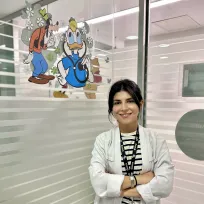
Baby teeth are not only essential for chewing but also for holding the space for the permanent teeth that will erupt underneath and for the development of the jawbone. Pedodontics helps children maintain the health of their baby teeth, preventing impairment of their speech ability and aesthetic appearance.
What is Pedodontics (Pediatric Dentistry)?
Pedodontics is a medical specialty that addresses all oral and dental health needs of individuals from infancy to young adulthood. Doctors who specialize in this field are called pedodontists.
Pediatric dentistry not only treats existing dental problems but also aims to prevent the development of dental phobia in children, fostering lifelong awareness of healthy oral hygiene. Early intervention can prevent complex orthodontic problems and tooth loss that may occur later in life.
You can fill out the form below to get information.
What does Pedodontics (Pediatric Dentistry) deal with?
In the Pedodontics (Pediatric Dentistry) department, various oral and dental problems that vary according to children's development are treated. In the pediatric dentistry department, problems arising from both genetic and environmental factors are addressed with a multidisciplinary approach. The problems addressed by the Pedodontics (Pediatric Dentistry) department are as follows:
- Fillings for baby teeth and new permanent teeth: It helps restore the tooth's shape by cleaning out the cavities.
- Fissure sealant applications: The deep grooves on the molars are closed to prevent decay.
- Placeholder applications: The aim is to preserve the space left by prematurely lost baby teeth until permanent teeth erupt.
- Fluoride applications: This is the process of strengthening tooth enamel to make it resistant to acids.
- Trauma treatments: We treat tooth fractures and dislocations caused by falls or impacts.
- Primary tooth root canal treatments: These are endodontic procedures performed to preserve a tooth in the mouth when it has advanced decay.
- Nutrition and oral hygiene education: Proper brushing techniques and tooth-friendly eating habits are taught.
When should children have their first dental check-up?
The World Health Organization and pediatric dentistry associations recommend that children have their first dental check-up after their first tooth erupts or at the latest around the age of one. The purpose of doing it so early is to educate parents about oral hygiene before any problems arise and to familiarize the baby with the clinical environment.
Early dental checkups make it easier to detect rapidly progressing dental diseases known as bottle caries. In addition, jaw development and the effects of habits such as thumb sucking on tooth structure should be evaluated by a pediatric dentist during this period.
What are the preventive dentistry practices in pedodontics?
The primary goal of pedodontics is not to treat teeth, but rather to prevent tooth decay. Therefore, these methods reduce the likelihood of the child needing more complicated treatments later in life. The most frequently preferred pedodontic preventive measures are as follows:
- Fissure sealants: The recesses (fissures) on the chewing surface of the teeth are the areas where bacteria attach most easily. These areas are sealed with a fluid material to prevent tooth decay.
- Topical fluoride application: Fluoride gels, applied by a specialist, remineralize tooth enamel, creating a protective shield against decay.
- Monitoring oral habits: To stop habits that disrupt the structure of the teeth and jaw, such as pacifier use, thumb sucking, or mouth breathing, the use of dental appliances may be necessary.
What is the importance of baby teeth? Why Should It Be Treated?
It is a big mistake for people to disregard cavities in baby teeth, thinking that they will be replaced by new ones anyway. Baby teeth serve as guides for permanent teeth, and early loss of baby teeth can lead to crooked teeth and changes in jaw development.
If baby teeth are lost, the following problems may develop:
- Nutrition: Children with toothaches or tooth loss cannot eat hard foods and therefore cannot maintain a balanced diet.
- Speech: Early loss of front teeth, in particular, prevents the correct pronunciation of letters such as "f, v, t, s, z".
- Psychology: Aesthetic imperfections and the foul odor of decay in teeth can lead to a loss of self-confidence in a child's peer group.
What is the relationship between pedodontics and orthodontics?
Pedodontics is the branch of dentistry that is often the first to notice signs of jaw narrowing or crowding in children during their growth and development. Early diagnosis allows interventions while bone development is still ongoing, preventing future problems and eliminating the need for surgery.
If a child has a genetically inherited jaw underdevelopment or protrusion, this condition is diagnosed in the pedodontics department, and the child is referred to an orthodontist at the appropriate age. Through this coordinated approach, the child's chewing and speech functions are preserved, and they also develop an aesthetically pleasing jaw structure.