
Robotic Surgery for the Treatment of Sleep Apnea
In the treatment of sleep apnea, robotic surgery is a modern surgical method that aims to precisely correct structures that narrow the airway.
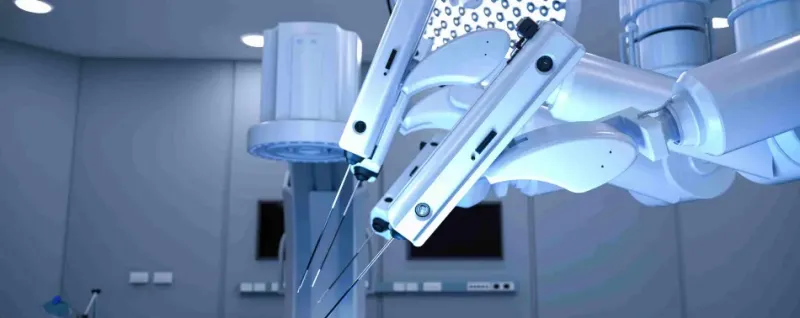
Sleep apnea is a sleep disorder that can significantly affect quality of life and is characterized by repeated pauses in breathing during sleep. Today, robotic surgery—especially when used in the surgical treatment of this condition—allows the anatomical problems causing sleep apnea to be addressed more effectively through high precision and minimal tissue damage.
What Is Robotic Sleep Apnea Treatment?
Robotic sleep apnea treatment refers to surgical procedures performed using robotic surgical technologies to correct upper airway narrowings that lead to sleep apnea.
In sleep apnea, breathing difficulties most commonly occur due to relaxation of soft tissues in the throat (upper airway), a narrow anatomical structure, or excessive tissue volume in certain areas, all of which can cause airway obstruction. Robotic surgery enables the elimination of these narrowings by providing the surgeon with a wider field of view and more controlled intervention, particularly in areas that are difficult to access through the mouth, such as the base of the tongue and surrounding regions.
In Which Situations Is Robotic Sleep Apnea Treatment Applied?
Robotic sleep apnea treatment is not a method applied to every individual with sleep apnea. If the source of the problem originates from specific structures in the throat or oral cavity and can be corrected surgically, robotic surgery becomes a viable option. Robotic sleep apnea treatment may be considered in the following situations:
- Obstructive sleep apnea: If the airway becomes blocked or significantly narrowed during sleep, this method may be evaluated.
- Enlarged tongue base (tongue base hypertrophy): If the tongue base moves backward and obstructs the airway, more controlled intervention can be performed in this area using robotic surgery.
- Soft palate sagging: If relaxation and downward sagging of the soft palate make airflow difficult during sleep, robotic surgery may be an option.
- Enlarged tonsils or adenoids: It can be applied in cases where enlarged tonsils or adenoids narrow the airway by increasing volume at the back of the throat.
- Airway narrowing concentrated in a single area: If the problem is localized to a specific point, robotic surgery allows focused intervention on that area to achieve more effective results.
- Narrowing in areas difficult to access through the mouth: Robotic systems provide significant advantages thanks to their clear visualization and precision, especially in deep regions such as the tongue base.
- Inability to use CPAP or lack of benefit from CPAP therapy: It may be considered as a surgical alternative for patients who cannot tolerate themask or do not achieve sufficient benefit from the device.
Fill out the form to get information and schedule an appointment
How Is Robotic Sleep Apnea Treatment Performed?
Robotic sleep apnea treatment is a controlled and well-planned surgical procedure performed by an experienced surgeon using robotic surgical systems such as da Vinci. The aim is to clearly visualize the structures that narrow or block the airway during sleep and to intervene in these areas with high precision.
First, the patient undergoes a detailed evaluation. Sleep test results, symptoms, the level at which the airway is narrowed, and the source of the problem are carefully assessed. At this stage, how the tongue base, soft palate, tonsils, or other parts of the throat affect breathing during sleep is determined. Based on this evaluation, it is decided whether robotic surgery is an appropriate option.
Once the decision for surgery is made, the procedure is performed under general anesthesia. The patient is fully asleep and does not feel any pain during the operation. Robotic sleep apnea treatment is usually performed through the mouth, meaning there are no external incisions on the neck or face. This provides a significant comfort advantage for patients.
The surgeon controls the procedure from the robotic system console. The robotic system provides a magnified, three-dimensional, and highly clear view, allowing the structures narrowing the airway to be visualized in great detail. The surgeon directs the robotic arms with precise hand movements and performs highly accurate interventions on the targeted area.
During the procedure, the surgical approach may vary depending on the area causing sleep apnea. If the tongue base is obstructing the airway, volume-reducing adjustments may be made in this region. If soft palate sagging is present, interventions are performed to open the airway. In cases of enlarged tonsils or adenoids, surgical treatment is planned specifically for these tissues.
Who Is Robotic Sleep Apnea Treatment Suitable For?
Robotic sleep apnea treatment is not a standard method applied directly to every sleep apnea patient. Many factors—such as the type and severity of sleep apnea, previously tried treatments, and throat anatomy—are evaluated together. Robotic sleep apnea treatment may be considered for the following groups:
- Patients diagnosed with obstructive sleep apnea: If the airway becomes blocked or significantly narrowed during sleep, robotic surgery may be considered.
- Patients who cannot tolerate CPAP therapy: For those who have difficulty using the mask due to throat anatomy, tongue base size, or soft palate structure, robotic surgery may be an alternative.
- Patients with significant structural narrowing of the airway: Individuals with anatomical issues in the tongue base, soft palate, or back of the throat that severely restrict airflow may be suitable candidates.
- Patients with an enlarged tongue base causing airway obstruction: Robotic surgery offers significant advantages, especially in tongue base–related obstructions.
- Patients with enlarged tonsils or adenoids causing sleep apnea: Robotic methods may be preferred when these tissues narrow the airway.
- Patients whose symptoms persist despite previous surgery: Robotic surgery may be reconsidered in cases where earlier procedures did not provide sufficient improvement.
- Patients seeking a more comfortable surgical process: Those expecting shorter recovery times and less damage to surrounding tissues may prefer robotic surgery.
- Cases with complex or challenging anatomy: Robotic surgery is beneficial in situations where classical surgical approaches are difficult due to sensitive or hard-to-reach areas.
What Are the Advantages of Robotic Surgery in Sleep Apnea Treatment?
Compared to conventional surgical methods, robotic surgery offers a more precise and controlled surgical experience in the treatment of sleep apnea. It provides comfort not only for the surgeon but also for the patient during the recovery process. Key advantages include:
- Clearer and magnified visualization: Three-dimensional, high-resolution imaging allows better visualization of airway-narrowing tissues and more controlled intervention.
- Highly precise and controlled surgical intervention: Enables targeted, point-specific treatment of the affected tissue.
- Ability to operate through the mouth: In most cases, surgery can be performed without external incisions, leaving no visible scars.
- Better preservation of surrounding tissues: Since the focus is only on the problematic area, damage to healthy tissues is minimized.
- More comfortable postoperative recovery: Symptoms such as pain and swelling are generally more manageable.
- Effectiveness in deep and hard-to-reach areas: Provides a major advantage in regions such as the tongue base and posterior throat, which are difficult to access with conventional surgery.
- An alternative for recurrent or insufficient previous surgeries.
What Should Be Considered After Robotic Sleep Apnea Treatment?
The postoperative period directly affects the success of the treatment and the comfort of recovery. Therefore, certain rules and precautions should be followed:
- Mild throat pain, burning, or difficulty swallowing may occur in the first few days. This is usually temporary and gradually decreases.
- Soft, warm, and non-irritating foods should be preferred initially. Hard, very hot, spicy, or acidic foods should be avoided.
- Adequate fluid intake helps keep the throat moist and supports healing.
- Smoking and alcohol can delay tissue healing and increase irritation; they should be strictly avoided for the period recommended by the physician.
- Rest is important during the first few days after surgery. Heavy exercise, sudden movements, and strenuous activities are not recommended.
- Painkillers and other medications should be taken exactly as prescribed. Additional medications should not be used without consulting the physician.
- Sleeping on the back may cause discomfort for some patients in the early period. Recommended sleeping positions should be followed.
- Follow-up appointments should not be missed.
- In cases of severe pain, bleeding, shortness of breath, or fever, medical attention should be sought immediately.
Is Robotic Sleep Apnea Treatment a Definitive Solution?
Robotic sleep apnea treatment does not represent a definitive or sole solution for every patient. The success of the treatment depends on the cause of sleep apnea, the location of the obstruction, and the patient’s overall condition.
Robotic surgery can provide significant improvement, especially in patients with specific structural problems that narrow the airway. By targeting obstructions in areas such as the tongue base, soft palate, or throat, the goal is to keep the airway more open. Reductions in snoring, improvement in nighttime breathing pauses, and better sleep quality may be observed. However, these results may not be the same for every patient.
In cases of multi-level sleep apnea—where narrowing occurs in more than one area—a single surgical intervention may not be sufficient. Additionally, factors such as weight, lifestyle, accompanying diseases, and sleep habits also play an important role in long-term success. Therefore, while robotic sleep apnea treatment may be sufficient on its own for some patients, others may require additional therapies.
What Are the Costs of Robotic Surgery for Sleep Apnea?
At Medipol Health Group, sleep apnea treatments are planned individually according to each patient’s needs, using advanced robotic surgical technologies and performed by experienced specialists. The treatment process and robotic surgery costs may vary depending on individual evaluations.
For detailed information and a personalized assessment, you may fill out the form on this page. The Medipol Health Group team will contact you as soon as possible.
Other Featured Technologies
- Halcyon
- 150 Watt Holmium Laser Energy
- 16-Slice Computed Tomography (CT)
- 256 Slice Computed Tomography (256 Slice CT)
- 3.0 Tesla Magnetic Resonance Imaging (3.0 T MRI)
- Amyloid PET CT
- Anymov Robotic Bed System
- Armeo Power Hand and Arm Robot
- Artis Zee
- Artis Zee Ceiling Eco
- Biodex Balance Training System
- Biograph mCT
- Biplane Digital Flat Detector Angiography System
- Bone Densitometer
- Bone Scintigraphy
- Brachytherapy
- Cardiac Spect
- Cardiac Ultrasound
- Cios Select
- CT Virtual Angiography
- CyberKnife M6
- Digital Flat Panel Mammography with Spectral Tomosynthesis
- Digital Mammography
- Doppler Radiological Color 4D Ultrasound (USG)
- Dual-Energy CT
- ESWL
- Flexible Ureterorenoscopy (FURS) with the Clear Petra System
- Flexible Ureteroscopy
- Gamma Knife
- HIFU (High Intensity Focused Ultrasound)
- Intensity-Modulated Radiation Therapy (IMRT)
- Intra-Operative MR
- IntraBeam (ZEISS)
- Lokomat Robotic Walking System
- Luminos Fusion
- MAGNETOM Sola
- MAGNETOM Vida
- MAMMOMAT Revelation
- Monalisa Touch Laser
- Mono-Plan Cardiac Angiography
- Monoplane Digital Flat Detector Cardiac Angiography System
- MR Elastography of Liver
- MR Fusion Prostate Biopsy
- MRgFUS (MR Guided Focused Ultrasound)
- MRI Under General Anesthesia
- Multix Fusion Max
- Multix Impact
- Multix Select DR
- O-ARM Perop CT Imaging System
- PET CT
- Polymobil Plus
- Prostate Surgery With HoLEP Method
- Radiotherapy
- Real Time 4D USG Voluson E8 Expert
- Robotic Heart Surgery: Heart Surgery with Robotic Assistance
- Robotic Kidney Surgery
- Robotic Surgery
- Robotic Surgery in Prostate Cancer
- Robotic Urology
- Smile Pro Laser
- SOMATOM Force Computed Tomography System
- SOMATOM go.All
- SOMATOM Perspective
- SPECT/CT
- StealthStation Surgical Navigation Systems
- Symbia Evo Excel
- The Use and Advantages of Robotic Surgery in Gynecology
- Use of Robotic Surgery in Ear, Nose, and Throat (ENT) Diseases
- Varian Truebeam
- What is Robotic Hip Replacement Surgery and How is it Performed?
- What is Robotic Knee Replacement Surgery and How is it Performed?
- What is Robotic Obesity Surgery, and Who is it Suitable For?
- Zeiss Artevo 800 Digital Microscope
Creation Date:02.02.2026
Update Date:02.02.2026
Created by:Medipol Health Group Web Editorial Board