
Intensity-Modulated Radiation Therapy (IMRT)
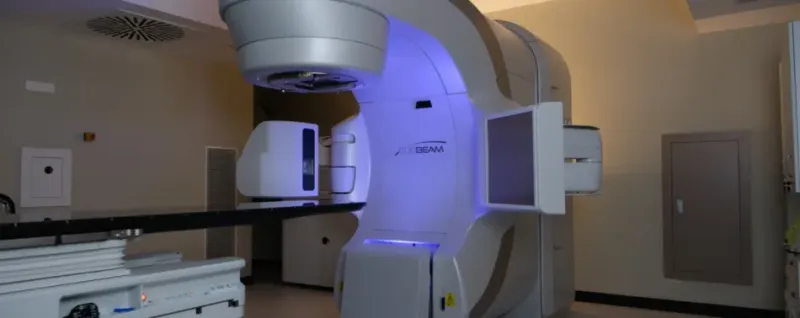
Intensity-Modulated Radiation Therapy (IMRT) is an advanced radiotherapy technique used in cancer treatment. In this method, high-dose radiation is delivered directly to the tumor with the aim of targeting only cancerous cells. This allows healthy tissues and organs to be preserved as much as possible. IMRT is especially preferred when the tumor is located close to critical organs, as it both increases treatment success and helps reduce side effects.
What Is Intensity-Modulated Radiation Therapy (IMRT)?
Intensity-Modulated Radiation Therapy (IMRT) is a modern, high-technology radiotherapy method used in cancer treatment. With this technique, the shape, intensity, and angles of radiation beams can be precisely adjusted. This allows the tumor to receive the highest possible radiation dose while surrounding healthy tissues are protected as much as possible.
In conventional radiotherapy, radiation beams are generally delivered in a uniform manner. However, in IMRT, a three-dimensional model of the tumor is created, enabling a customized dose distribution. In other words, different radiation doses can be directed to different parts of the tumor. This makes it possible to treat irregularly shaped tumors or tumors located close to vital organs more safely and effectively.
Fill Out the Form for Detailed Information
Why Is Intensity-Modulated Radiotherapy (IMRT) Performed?
Intensity-modulated radiotherapy (IMRT) is performed to precisely target the tumor while minimizing damage to the surrounding healthy tissues. For this reason, IMRT is especially preferred in cases where the tumor is located very close to sensitive or vital organs. The main reasons for using IMRT can be summarized as follows:
- Delivering high-dose radiation directly to the tumor to achieve effective tumor control
- Adjusting radiation intensity according to different areas to prevent unnecessary radiation exposure to healthy organs and tissues
- Reducing side effects such as difficulty swallowing, bowel problems, and urinary issues compared to conventional methods, particularly when applied to sensitive regions like the head and neck, brain, prostate, or chest
- Safely treating irregularly shaped tumors or tumors located near critical organs such as the heart, spinal cord, bladder, and rectum-
- Achieving higher treatment success by delivering stronger and more effective radiation doses to the tumor
How Does Intensity-Modulated Radiotherapy (IMRT) Work?
Intensity-modulated radiotherapy (IMRT) is a treatment method that works by computer-controlled adjustment of the intensity of radiation beams delivered to the tumor. This allows the beams to be sent from different angles and at varying intensities, precisely conforming to the tumor’s three-dimensional shape.
First, detailed images of the patient are obtained using advanced imaging techniques such as computed tomography (CT), magnetic resonance imaging (MRI), or PET-CT. These images create a three-dimensional map that shows the size, shape, and location of the tumor in relation to surrounding organs.
Next, the tumor’s three-dimensional structure is transferred to a computer using specialized software. The direction, dose, and intensity of the radiation beams are carefully calculated. While the radiation dose to critical organs (such as the spinal cord, heart, or bladder) is minimized, an effective high dose is delivered to every part of the tumor.
During treatment, the patient is positioned on the treatment table and kept still. A linear accelerator delivers radiation beams from the planned angles. The machine’s head moves around the patient during the session, allowing the beams to surround the tumor. The device does not touch the patient at any time. Each session usually lasts about 10–20 minutes and is painless.
In Which Diseases Is Intensity-Modulated Radiotherapy (IMRT) Used?
Intensity-modulated radiotherapy (IMRT) can be safely used in the treatment of many types of cancer. It offers significant advantages, particularly in preserving vital functions such as swallowing, speech, and taste in head and neck cancers; reducing urinary and bowel side effects in prostate cancer; and protecting the heart and lungs in breast cancer. It can also be safely applied in brain, lung, gynecological, and gastrointestinal tumors.
IMRT is most commonly used in the following diseases:
- Head and neck tumors
- Brain tumors
- Prostate cancer
- Breast cancer
- Lung cancer
- Gynecological cancers (uterine, cervical, and ovarian tumors)
- Gastrointestinal cancers (pancreatic, rectal, and liver tumors)
- Certain hematological cancers such as lymphoma
What Should Be Considered Before Intensity-Modulated Radiotherapy (IMRT)?
To ensure that IMRT treatment is carried out effectively, certain preparations are required before therapy. These preparations include the following:
- Imaging studies such as CT, MRI, or PET-CT are performed to plan the treatment accurately.
- The patient must remain still during treatment; therefore, special immobilization devices may be used to maintain the correct position.
- Especially for abdominal or prostate tumors, the bladder may need to be full or empty, and bowel preparation may be required.
- All regularly used medications, particularly blood thinners, must be reported to the physician.
- Previous surgeries, allergies, and any history of prior radiotherapy or chemotherapy should be shared, as they are important for treatment planning.
- The physician’s instructions regarding meals before treatment should be followed; conditions such as an overly full stomach or empty bowels should be avoided.
- The skin in the area to be treated should be clean. The use of lotions, creams, or perfumes may be discouraged before treatment.
What Are the Advantages of Intensity-Modulated Radiotherapy (IMRT)?
Intensity-modulated radiotherapy (IMRT) offers a much more precise, safe, and effective approach compared to conventional radiotherapy. Since the intensity and angles of the radiation beams can be adjusted using computer-assisted planning, treatment success increases while side effects are significantly reduced. Its main advantages include:
- Precise tumor targeting: Irregularly shaped tumors or tumors located in difficult areas can be treated effectively.
- Protection of healthy tissues: Vital organs adjacent to the tumor are spared from unnecessary radiation exposure.
- Reduced side effects: Compared to conventional radiotherapy, fewer side effects such as dry mouth, difficulty swallowing, bowel problems, or urinary issues are observed.
- Ability to deliver higher doses: Because healthy tissues are better protected, higher and more effective radiation doses can be delivered to the tumor.
- Preservation of quality of life: Patients can more easily continue their daily activities during treatment.
- Wide range of applications: IMRT can be safely used in many different tumor types, including head and neck, brain, prostate, breast, lung, and gynecological cancers.
- Personalized treatment planning: Thanks to advanced imaging and computer-based planning, treatment can be tailored specifically to each patient.
Other Featured Technologies
- Halcyon
- 150 Watt Holmium Laser Energy
- 16-Slice Computed Tomography (CT)
- 256 Slice Computed Tomography (256 Slice CT)
- 3.0 Tesla Magnetic Resonance Imaging (3.0 T MRI)
- Amyloid PET CT
- Anymov Robotic Bed System
- Armeo Power Hand and Arm Robot
- Artis Zee
- Artis Zee Ceiling Eco
- Biodex Balance Training System
- Biograph mCT
- Biplane Digital Flat Detector Angiography System
- Bone Densitometer
- Bone Scintigraphy
- Brachytherapy
- Cardiac Spect
- Cardiac Ultrasound
- Cios Select
- CT Virtual Angiography
- CyberKnife M6
- Digital Flat Panel Mammography with Spectral Tomosynthesis
- Digital Mammography
- Doppler Radiological Color 4D Ultrasound (USG)
- Dual-Energy CT
- ESWL
- Flexible Ureterorenoscopy (FURS) with the Clear Petra System
- Flexible Ureteroscopy
- Gamma Knife
- HIFU (High Intensity Focused Ultrasound)
- Intra-Operative MR
- IntraBeam (ZEISS)
- Lokomat Robotic Walking System
- Luminos Fusion
- MAGNETOM Sola
- MAGNETOM Vida
- MAMMOMAT Revelation
- Monalisa Touch Laser
- Mono-Plan Cardiac Angiography
- Monoplane Digital Flat Detector Cardiac Angiography System
- MR Elastography of Liver
- MR Fusion Prostate Biopsy
- MRgFUS (MR Guided Focused Ultrasound)
- MRI Under General Anesthesia
- Multix Fusion Max
- Multix Impact
- Multix Select DR
- O-ARM Perop CT Imaging System
- PET CT
- Polymobil Plus
- Prostate Surgery With HoLEP Method
- Radiotherapy
- Real Time 4D USG Voluson E8 Expert
- Robotic Heart Surgery: Heart Surgery with Robotic Assistance
- Robotic Kidney Surgery
- Robotic Surgery
- Robotic Surgery for the Treatment of Sleep Apnea
- Robotic Surgery in Prostate Cancer
- Robotic Urology
- Smile Pro Laser
- SOMATOM Force Computed Tomography System
- SOMATOM go.All
- SOMATOM Perspective
- SPECT/CT
- StealthStation Surgical Navigation Systems
- Symbia Evo Excel
- The Use and Advantages of Robotic Surgery in Gynecology
- Use of Robotic Surgery in Ear, Nose, and Throat (ENT) Diseases
- Varian Truebeam
- What is Robotic Hip Replacement Surgery and How is it Performed?
- What is Robotic Knee Replacement Surgery and How is it Performed?
- What is Robotic Obesity Surgery, and Who is it Suitable For?
- Zeiss Artevo 800 Digital Microscope
Creation Date:02.02.2026
Update Date:02.02.2026
Created by:Medipol Health Group Web Editorial Board