
Flexible Ureteroscopy
Laser kidney stone treatment with flexible ureteroscopy offers a fast and reliable solution. Stones are removed using a minimally invasive method.
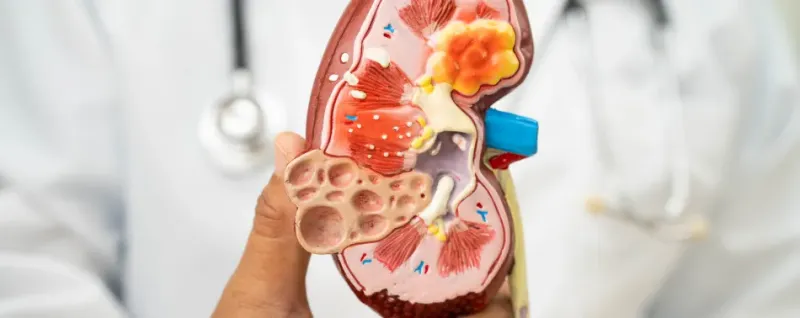
Flexible ureteroscopy is a minimally invasive method for the treatment of kidney stones. Laser lithotripsy breaks the stones into small fragments using advanced technology.
This method stands out for its quick recovery time and low risk of complications, offering an effective and reliable solution for those seeking relief from kidney stones.
What is Flexible Ureteroscopy (fURS) Treatment?
Flexible ureteroscopy (fURS) is a widely used and reliable method for the diagnosis and treatment of various upper urinary tract pathologies.
Its most common application is the treatment of upper urinary tract stones with Holmium:YAG laser lithotripsy. Advances in endoscopic technology have made fURS applicable even for larger and more complex kidney stones.
With its high success rate and low complication risk, fURS is considered a safe and effective option for the treatment of urolithiasis. With future technological innovations, it is expected that fURS will expand its clinical applications and, in some cases, become the first-choice treatment method.
Fill out the form to get information and schedule an appointment.
How is Flexible URS Performed?
Flexible URS (Ureteroscopy) is a stone treatment performed by accessing the urinary tract using a fiberoptic ureteroscope. The procedure is carried out under general anesthesia. The ureteroscope is advanced through the urethra and bladder to reach the kidney.
Depending on the stone’s location and size, it may be removed in one piece using a special basket device. If the stone is large, it is fragmented within the kidney using a laser before removal.
This method does not require any incisions in the skin. Access is achieved via the urethra. A thin sheath is inserted with the help of a guidewire, through which the flexible ureteroscope is advanced to the kidney.
After visualizing the stone with the camera, a 230-micron laser fiber is passed through the ureteroscope to reach the stone. The laser energy is applied directly to the stone, breaking it into smaller fragments.
The procedure continues until the stone is fragmented into pieces small enough to pass naturally without causing obstruction.
Benefits of Laser Kidney Stone Treatment (Flexible Ureteroscopy)
Flexible ureteroscopy stands out in kidney stone treatment with a high success rate (90–96%). Since the procedure reaches the kidney through the natural urinary tract, it does not leave any incision marks on the body, unlike open surgery or percutaneous methods.
- Benefits of Laser Kidney Stone Treatment include:
- High success rate (90–96%)
- No incision marks on the body
- Does not damage kidney tissue
- Very low risk of bleeding
- Safe for patients using blood thinners
- Usually allows discharge the next day
- Can be applied in patients with congenital kidney anomalies
- Treats kidney and ureter stones in the same session
- Provides a solution for stones in both kidneys in a single session
- Safe for overweight patients
Research shows that this method does not harm kidney tissue and does not negatively affect kidney function. Additionally, since it carries a minimal risk of bleeding, it is a safe option for patients with bleeding tendencies or those taking anticoagulant medications.
Patients are generally discharged the day after the procedure. It also provides an effective treatment option for individuals with congenital kidney anomalies, such as pelvic kidney or horseshoe kidney.
Side Effects of Laser Kidney Stone Treatment (Flexible Ureteroscopy)
After stone treatment and stent placement, some side effects and complications may occur. These effects are generally mild, but patients should monitor the process carefully.
Possible side effects of laser kidney stone treatment include:
- Mild burning, pain, bleeding, or infection during the first few days
- Stent use may cause pain, blood in the urine, frequent urination, and discomfort
- Rarely, injury to the kidney or ureter may occur
- The possibility that the stone is not completely removed
- Risk of stones forming again
- Ureteral narrowing or scar tissue development
Is Flexible URS Surgery Difficult?
Flexible URS surgery is generally a safe procedure, and serious complications are uncommon in most patients. The risk of complications can be influenced by the size and location of the stone, the patient’s overall health, and the duration of the operation.
How Long Does Flexible URS Surgery Take?
In flexible URS surgery, a thin and flexible device called a ureteroscope is advanced through the urinary tract to reach the bladder or kidney. The duration of the operation depends on the patient’s condition and the size of the stone. It is generally completed within 30 minutes to 2 hours.
Which Department Performs Laser Kidney Stone Treatment (Flexible Ureteroscopy)?
Laser kidney stone treatment (Flexible Ureteroscopy) is performed by the Urology Department.
Frequently Asked Questions About Flexible Ureteroscopy
Is a Stent Placed After Laser Kidney Stone Treatment?
After laser kidney stone treatment, a temporary stent may be placed to ensure urine flow and prevent kidney swelling.
What Should Be Done After the Stone is Broken in the Kidney?
After the kidney stone is fragmented, drinking plenty of water helps flush the stone fragments through the urine. Pain relievers prescribed by the doctor should be used, and signs of infection should be monitored.
How Are Laser-Fractured Kidney Stones Removed?
Stone fragments broken by laser usually pass naturally through the urinary tract. Larger fragments may be removed surgically using aspiration.
How Can We Know if the Kidney Stone Has Passed?
Signs that the kidney stone has passed include sudden relief of pain, passing stone fragments while urinating, and no persistent pain.
Can a Stone in the Ureter Be Broken with a Laser?
Yes, a stone that has moved into the ureter can be broken using a laser via ureteroscopy, and the fragments can be passed out of the body.
Is Kidney Stone Treatment Performed as an Inpatient Procedure?
Laser kidney stone treatment is usually done on an outpatient basis and does not require hospital stay, although hospitalization may be necessary if complications occur.
Does Laser Kidney Stone Surgery Leave a Scar?
Since laser kidney stone surgery is performed using minimally invasive methods, it typically does not leave noticeable scars.
Is Laser Kidney Stone Surgery Performed Under Anesthesia?
Laser kidney stone surgery is generally performed under general anesthesia, but in some cases, spinal anesthesia may be used.
What is the Most Effective Way to Pass a Kidney Stone?
The most effective ways to pass a kidney stone include drinking plenty of water, regular exercise, and taking medications recommended by the doctor.
What Size of Kidney Stone is Dangerous?
Kidney stones larger than 6 mm usually do not pass on their own and can be dangerous due to the risk of obstruction or infection.
Other Featured Technologies
- Halcyon
- 150 Watt Holmium Laser Energy
- 16-Slice Computed Tomography (CT)
- 256 Slice Computed Tomography (256 Slice CT)
- 3.0 Tesla Magnetic Resonance Imaging (3.0 T MRI)
- Amyloid PET CT
- Anymov Robotic Bed System
- Armeo Power Hand and Arm Robot
- Artis Zee
- Artis Zee Ceiling Eco
- Biodex Balance Training System
- Biograph mCT
- Biplane Digital Flat Detector Angiography System
- Bone Densitometer
- Bone Scintigraphy
- Brachytherapy
- Cardiac Spect
- Cardiac Ultrasound
- Cios Select
- CT Virtual Angiography
- CyberKnife M6
- Digital Flat Panel Mammography with Spectral Tomosynthesis
- Digital Mammography
- Doppler Radiological Color 4D Ultrasound (USG)
- Dual-Energy CT
- ESWL
- Flexible Ureterorenoscopy (FURS) with the Clear Petra System
- Gamma Knife
- HIFU (High Intensity Focused Ultrasound)
- Intensity-Modulated Radiation Therapy (IMRT)
- Intra-Operative MR
- IntraBeam (ZEISS)
- Lokomat Robotic Walking System
- Luminos Fusion
- MAGNETOM Sola
- MAGNETOM Vida
- MAMMOMAT Revelation
- Monalisa Touch Laser
- Mono-Plan Cardiac Angiography
- Monoplane Digital Flat Detector Cardiac Angiography System
- MR Elastography of Liver
- MR Fusion Prostate Biopsy
- MRgFUS (MR Guided Focused Ultrasound)
- MRI Under General Anesthesia
- Multix Fusion Max
- Multix Impact
- Multix Select DR
- O-ARM Perop CT Imaging System
- PET CT
- Polymobil Plus
- Prostate Surgery With HoLEP Method
- Radiotherapy
- Real Time 4D USG Voluson E8 Expert
- Robotic Heart Surgery: Heart Surgery with Robotic Assistance
- Robotic Kidney Surgery
- Robotic Surgery
- Robotic Surgery for the Treatment of Sleep Apnea
- Robotic Surgery in Prostate Cancer
- Robotic Urology
- Smile Pro Laser
- SOMATOM Force Computed Tomography System
- SOMATOM go.All
- SOMATOM Perspective
- SPECT/CT
- StealthStation Surgical Navigation Systems
- Symbia Evo Excel
- The Use and Advantages of Robotic Surgery in Gynecology
- Use of Robotic Surgery in Ear, Nose, and Throat (ENT) Diseases
- Varian Truebeam
- What is Robotic Hip Replacement Surgery and How is it Performed?
- What is Robotic Knee Replacement Surgery and How is it Performed?
- What is Robotic Obesity Surgery, and Who is it Suitable For?
- Zeiss Artevo 800 Digital Microscope
Creation Date:30.01.2026
Update Date:27.03.2026
Created by:Medipol Health Group Web Editorial Board