
Bone Scintigraphy
Bone scintigraphy is an imaging method used for the early diagnosis of conditions such as fractures, tumors, infections, or metastases by scanning the bones with a radioactive substance.
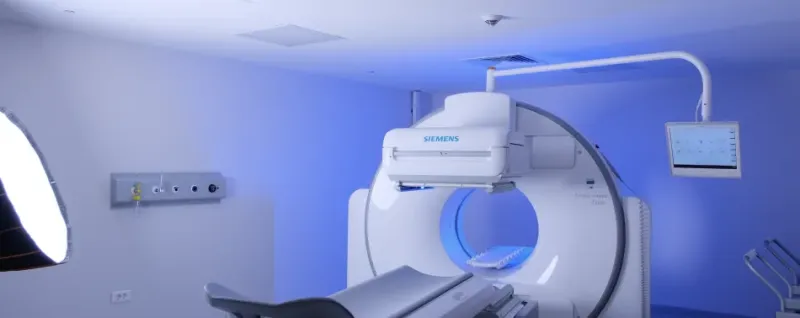
Bone scintigraphy is a nuclear medicine imaging method used to evaluate structural and functional changes in bone tissue. A low-dose radioactive substance, known as a radiopharmaceutical, is administered intravenously to provide detailed information about the condition of the bones throughout the body. It plays an important role in the early diagnosis of fractures, tumors, infections, and metabolic bone diseases.
What Is Bone Scintigraphy?
Bone scintigraphy is an imaging method used to evaluate the structure and function of the bones. Thanks to this method, abnormal changes occurring in the bones can be detected at a very early stage. In particular, some disease foci that are not yet visible with conventional imaging methods such as X-ray or computed tomography can be identified through scintigraphy.
The main purpose of bone scintigraphy is to determine whether there is abnormal activity in the bones. For this purpose, a low-dose radioactive substance is administered intravenously to the patient. This substance accumulates especially in bone tissue. Afterwards, the entire skeletal system is scanned using a special device called a gamma camera, and images are obtained.
With this method, physicians can evaluate fractures, bone tumors or metastases, bone infections, inflammatory joint diseases, osteoporosis, and similar metabolic bone disorders.
Bone scintigraphy is generally a safe and painless examination. Since the radiation dose is low, it does not pose a significant risk to patients.
Fill out the form to get information and make an appointment
Why Is Bone Scintigraphy Performed?
Bone scintigraphy is performed to detect diseases, damage, and abnormal conditions that may occur in the skeletal system at an early stage. It provides diagnostic information across a wide range of conditions, from cancer follow-up to sports injuries, inflammatory diseases, and metabolic disorders. It is a particularly important examination because it can reveal findings that may be overlooked by imaging methods such as CT and MRI. The main reasons for performing bone scintigraphy include:
- Detection of fractures
- Evaluation of tumors and metastases
- Assessment of bone infections (osteomyelitis) or joint inflammations (arthritis)
- Metabolic bone diseases (osteoporosis, Paget’s disease, etc.)
- Evaluation of prostheses
- Investigation of the source of pain
How to Prepare for Bone Scintigraphy?
Bone scintigraphy is generally an easy-to-perform technique that does not require special preparation for most patients. However, there are some points to consider for more accurate results:
- Fasting is usually not required, and regular medications are not discontinued. Nevertheless, the physician should be informed.
- Before the procedure, a low-dose radioactive substance is administered intravenously.
- There is usually a waiting period of 2–4 hours for the substance to accumulate in the bones.
- During this time, the patient is advised to drink plenty of water to improve image quality and accelerate excretion from the body.
- Patients are advised to wear comfortable clothing. Metal accessories should be removed during the procedure. Wearing a patient gown may be recommended.
- Women who are pregnant or suspect pregnancy, as well as breastfeeding mothers, must inform their doctor before the procedure.
- Any allergies or sensitivities should be reported to the physician.
How Is Bone Scintigraphy Performed?
There are two types of bone scintigraphy: whole-body bone scintigraphy and three-phase bone scintigraphy. Therefore, the procedure steps may vary.
Three-Phase Bone Scintigraphy Procedure Steps:
- This method is used when information about both bone structure and blood flow in a specific area is required.
- The patient is positioned under a gamma camera, and the radioactive substance is injected intravenously.
- Simultaneously, blood flow and blood pool images are obtained (approximately 10–15 minutes).
- The patient is then taken to a waiting period. After 2–4 hours, once the radiopharmaceutical has accumulated in the bones, whole-body imaging is performed.
- This method is especially preferred for evaluating infections, malignant tumors, problems around prostheses, and fracture healing.
Whole-Body Bone Scintigraphy Procedure Steps:
- This method is used when a general evaluation is required.
- The radioactive substance is injected intravenously.
- After a waiting period of 2–4 hours, the patient is scanned from head to toe using a gamma camera.
- It is particularly used to investigate bone metastases, determine the cause of widespread bone pain, and evaluate systemic bone diseases.
Who Should Not Undergo Bone Scintigraphy?
Bone scintigraphy is generally a safe method and can be performed on most patients. However, in certain special situations, the examination is not recommended or may be postponed. The groups for whom the procedure may not be suitable include:
- Pregnant women
- Breastfeeding mothers
- Patients who have difficulty remaining immobile for a long time, those with serious health conditions, or patients in intensive care
- Individuals with allergies or hypersensitivity to the radiopharmaceuticals used
- Patients with severe renal failure
- Those who have recently undergone nuclear medicine imaging or treatment
Frequently Asked Questions About Bone Scintigraphy
How Long Does Bone Scintigraphy Take?
The imaging process usually takes between 30 minutes and 1 hour.
What Should Be Done After Bone Scintigraphy?
Patients should drink plenty of water and urinate frequently throughout the day to help eliminate the radioactive substance from the body.
Are the Results of a Bone Scan Available Immediately?
Although images are obtained on the same day, preparing the report may take several hours or up to one day.
What Is Evaluated in Bone Scintigraphy?
Blood flow, metabolic activity, and abnormal lesions in the bones are evaluated.
Should Bone Scans Be Performed While Fasting or Full?
Fasting or being full does not affect bone measurement or scintigraphy.
Which Medications Should Not Be Used Before Scintigraphy?
There are generally no medication restrictions, but some specific medications recommended by the physician may need to be discontinued.
How Long Does Radiation Remain in the Body After Scintigraphy?
The radioactive substance is usually eliminated from the body within 24 hours.
Can Cancer Be Detected with Bone Scintigraphy?
Yes, bone scintigraphy can show whether cancer has spread to the bones.
Other Featured Technologies
- Halcyon
- 150 Watt Holmium Laser Energy
- 16-Slice Computed Tomography (CT)
- 256 Slice Computed Tomography (256 Slice CT)
- 3.0 Tesla Magnetic Resonance Imaging (3.0 T MRI)
- Amyloid PET CT
- Anymov Robotic Bed System
- Armeo Power Hand and Arm Robot
- Artis Zee
- Artis Zee Ceiling Eco
- Biodex Balance Training System
- Biograph mCT
- Biplane Digital Flat Detector Angiography System
- Bone Densitometer
- Brachytherapy
- Cardiac Spect
- Cardiac Ultrasound
- Cios Select
- CT Virtual Angiography
- CyberKnife M6
- Digital Flat Panel Mammography with Spectral Tomosynthesis
- Digital Mammography
- Doppler Radiological Color 4D Ultrasound (USG)
- Dual-Energy CT
- ESWL
- Flexible Ureterorenoscopy (FURS) with the Clear Petra System
- Flexible Ureteroscopy
- Gamma Knife
- HIFU (High Intensity Focused Ultrasound)
- Intensity-Modulated Radiation Therapy (IMRT)
- Intra-Operative MR
- IntraBeam (ZEISS)
- Lokomat Robotic Walking System
- Luminos Fusion
- MAGNETOM Sola
- MAGNETOM Vida
- MAMMOMAT Revelation
- Monalisa Touch Laser
- Mono-Plan Cardiac Angiography
- Monoplane Digital Flat Detector Cardiac Angiography System
- MR Elastography of Liver
- MR Fusion Prostate Biopsy
- MRgFUS (MR Guided Focused Ultrasound)
- MRI Under General Anesthesia
- Multix Fusion Max
- Multix Impact
- Multix Select DR
- O-ARM Perop CT Imaging System
- PET CT
- Polymobil Plus
- Prostate Surgery With HoLEP Method
- Radiotherapy
- Real Time 4D USG Voluson E8 Expert
- Robotic Heart Surgery: Heart Surgery with Robotic Assistance
- Robotic Kidney Surgery
- Robotic Surgery
- Robotic Surgery for the Treatment of Sleep Apnea
- Robotic Surgery in Prostate Cancer
- Robotic Urology
- Smile Pro Laser
- SOMATOM Force Computed Tomography System
- SOMATOM go.All
- SOMATOM Perspective
- SPECT/CT
- StealthStation Surgical Navigation Systems
- Symbia Evo Excel
- The Use and Advantages of Robotic Surgery in Gynecology
- Use of Robotic Surgery in Ear, Nose, and Throat (ENT) Diseases
- Varian Truebeam
- What is Robotic Hip Replacement Surgery and How is it Performed?
- What is Robotic Knee Replacement Surgery and How is it Performed?
- What is Robotic Obesity Surgery, and Who is it Suitable For?
- Zeiss Artevo 800 Digital Microscope
Creation Date:30.01.2026
Update Date:30.01.2026
Created by:Medipol Health Group Web Editorial Board